Anti-RICH2 Antibody FITC: A Precision Tool for Advanced Research

Gentaur
06 Oct 2025
The Anti-RICH2 Antibody FITC from Gentaur is a highly specialized reagent. It is designed for precise detection of the RICH2 protein. This antibody is critical for researchers investigating complex cellular mechanisms, particularly in neurobiology and cell signaling. Its conjugation with Fluorescein Isothiocyanate (FITC) provides a powerful fluorescent tag, enabling visualization in various advanced research techniques.
Key Insights into the Anti-RICH2 Antibody FITC
- Precise Target Detection: The antibody specifically targets RICH2 (also known as ARHGAP44), a crucial Rho GTPase-activating protein.
- Fluorescent Labeling: Conjugation with FITC allows for sensitive detection and visualization in fluorescence-based assays.
- Diverse Research Applications: It is widely used in techniques such as flow cytometry, immunofluorescence, Western Blotting, and ELISA, supporting studies across multiple species.
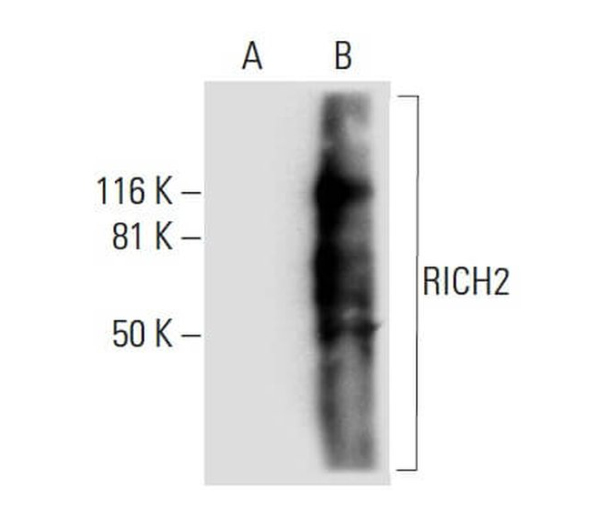
Figure 1: Example Western Blotting data demonstrating RICH2 protein detection, a common application for the anti-RICH2 antibody.
Understanding the RICH2 Protein and Its Significance
RICH2 (Wikipedia), also identified as ARHGAP44, stands as a pivotal Rho GTPase-activating protein (GAP). This protein is integral to the intricate ballet of cellular processes. Its primary function involves stimulating the GTPase activity of Rho-family GTPases, such as CDC42 and RAC1. This action is crucial for cycling these small GTPases between their active (GTP-bound) and inactive (GDP-bound) states. This regulatory mechanism is fundamental to controlling various aspects of cell behavior.

ERICH2 gene location as depicted by the National Center for Biotechnology Information (NCBI).
The Role of RICH2 in Neuronal Function
In the realm of neurobiology, RICH2 plays a significant role. It is deeply involved in processes like dendritic spine formation and synaptic plasticity. Dendritic spines are small protrusions from a neuron's dendrite that receive synaptic input. RICH2 influences the morphology of these spines and limits the formation of exploratory dendritic filopodia. This regulation is essential for proper neural circuit development and function. Without precise control, synaptic connections could be aberrant, impacting learning and memory processes. The protein's interaction with SHANK3 further underscores its importance in neuronal signaling, affecting AMPA receptor exocytosis and long-term potentiation (NCBI Gene database for ARHGAP44). For deeper insights into GTPase functions, the National Institute of General Medical Sciences (NIGMS) offers extensive resources (nigms.nih.gov).
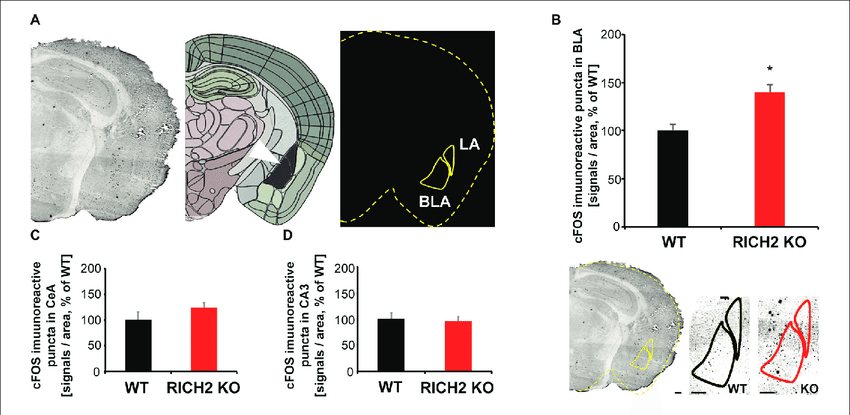
ResearchGate's photo : Altered neuronal activation in amygdala of RICH2 KO mice in response to novel objects.
Cytoskeletal Dynamics and Cell Signaling
Beyond neurons, RICH2 is a key regulator of the actin cytoskeleton. The actin cytoskeleton is a dynamic network of protein filaments essential for cell shape, movement, and division. By modulating Rho-family GTPases, RICH2 influences actin polymerization and organization. This impacts cell motility, adhesion, and overall cellular architecture. Understanding these mechanisms is vital for research into various cellular disorders and developmental biology. Information on protein functions can be found on databases like UniProt (UniProt entry Q17R89 for RICH2).
The Power of FITC Conjugation
The Anti-RICH2 Antibody is conjugated with Fluorescein Isothiocyanate (FITC) (wikipedia). FITC is a widely recognized and utilized fluorescent dye. This conjugation makes the antibody visible under specific light conditions. It absorbs light strongly around 495 nm and emits green fluorescence at approximately 519 nm. These properties make FITC an ideal label for fluorescence-based detection methods.

Figure : Fluorescein isothiocyanate
Applications in Fluorescent Microscopy and Flow Cytometry
The FITC label enhances the utility of the Anti-RICH2 antibody in several applications:
- Immunofluorescence (IF): Researchers can visualize the precise localization and distribution of RICH2 within cells and tissues. This provides spatial information crucial for understanding protein function. Protocols for fluorescent antibody conjugates are available from our team of researchers.
- Flow Cytometry: This technique allows for the identification and quantification of cells expressing the RICH2 protein. It can be used to analyze cell populations based on RICH2 expression levels.
Technical Specifications and Usage Guidelines
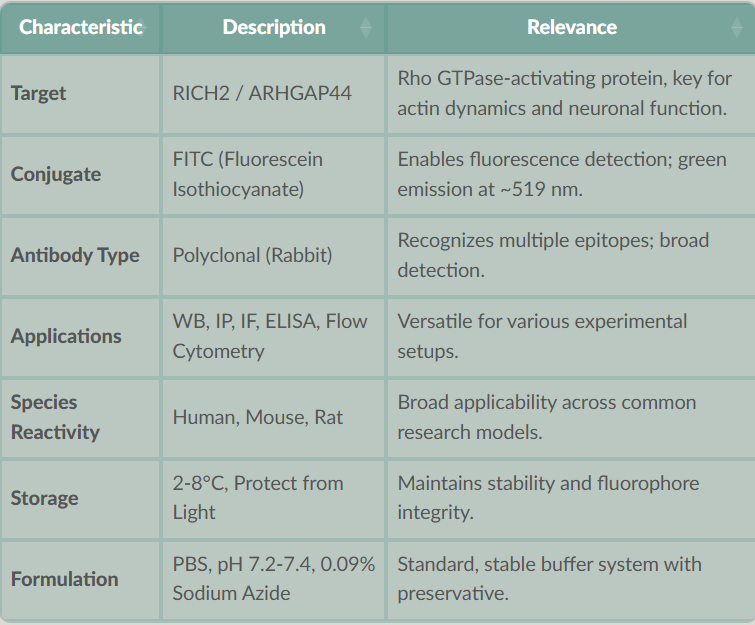
The Gentaur Anti-RICH2 Antibody FITC (Product Cat. 665-STJ502782) is typically a rabbit polyclonal antibody. It is affinity-purified to ensure high specificity and reduce non-specific binding. The formulation generally includes phosphate-buffered saline (PBS) at pH 7.2-7.4 with 0.09% sodium azide as a preservative. Sodium azide's safety data is available from the CDC's NIOSH Pocket Guide to Chemical Hazards.
Key Technical Details for Researchers:
- Target Protein: RICH2/ARHGAP44.
- Antibody Type: Often polyclonal (rabbit) for broad epitope recognition, though monoclonal versions exist from other suppliers.
- Label: FITC, optimally excited at 488 nm.
- Predicted Cross-Reactivity: Human, mouse, and rat, due to sequence homology. Always confirm with specific experimental conditions.
- Storage: Store at 2–8°C, protected from light. Avoid freezing to preserve fluorochrome integrity.
- Applications: Western Blotting (WB), Immunoprecipitation (IP), Immunofluorescence (IF), Enzyme-Linked Immunosorbent Assay (ELISA), and Flow Cytometry.
Optimal antibody concentration must be determined empirically for each specific application. This ensures precise staining with minimal background. For example, up to 0.5 µg per million cells is a common starting point for flow cytometry.
Here is a summary of the antibody's general characteristics:
It is important to remember that this reagent is intended strictly for research use. It is not approved for diagnostic or therapeutic procedures.
Strategic Planning for Experiments with Anti-RICH2 Antibody FITC
Effective experimental design is paramount for achieving robust and reproducible results. When utilizing the Anti-RICH2 Antibody FITC, several key considerations should guide your planning. This approach ensures that the antibody's capabilities are fully leveraged and that potential pitfalls are minimized.
- Confirming Species Reactivity and Isoforms
Before beginning your experiments, always confirm that the antibody's stated species reactivity matches your samples. The Gentaur Anti-RICH2 Antibody FITC is typically reactive with human, mouse, and rat samples due to sequence homology. However, individual experimental conditions can vary. It's also crucial to consider potential isoform specificity if your research focuses on a particular variant of RICH2. Resources like the NCBI Gene database (NCBI Gene Database) provide detailed information on gene and protein isoforms across species.
- Choosing the Right Assay Based on FITC Readout
The FITC conjugation inherently guides the choice of detection method. Fluorescence-based assays are the most suitable. Immunofluorescence (IF) and flow cytometry are primary applications where the FITC label excels. If your research requires techniques like Western Blot (WB) or ELISA, verify if a FITC-labeled variant is appropriate for your specific readout or if a non-conjugated version of the antibody might be more suitable.
- Implementing Essential Controls
No experiment is complete without appropriate controls. For fluorescence-based assays:
- Negative Control: Include a sample where the primary antibody is omitted, or an isotype control antibody is used. This helps to gauge non-specific binding and autofluorescence.
- Positive Control: If available, use a known positive control for RICH2 in your system. This validates the antibody's performance and ensures proper staining.
Comparative Analysis of Anti-RICH2 Antibody Characteristics
To further illustrate the versatility and considerations for anti-RICH2 antibodies, the radar chart below provides an opinionated analysis of key characteristics. This visual representation helps researchers quickly grasp the strengths and potential areas for optimization when selecting such reagents.
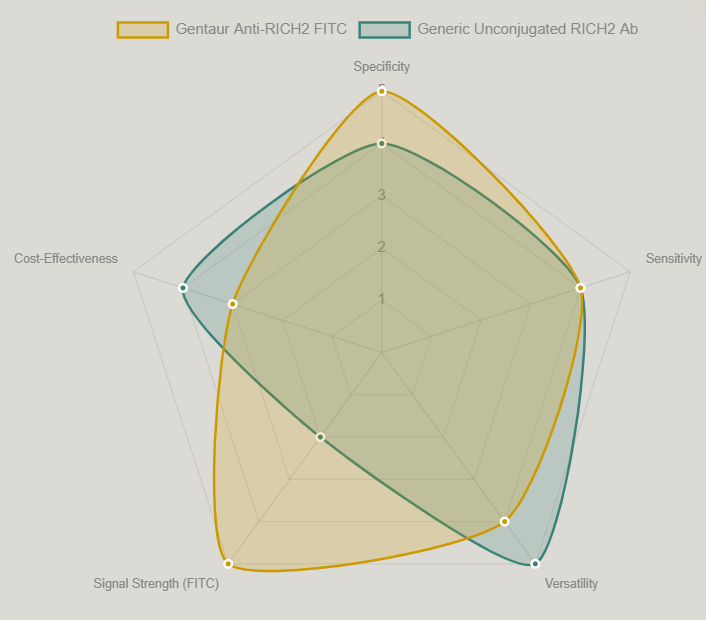
Figure 2: Radar chart comparing key characteristics of Gentaur's Anti-RICH2 FITC antibody with a hypothetical generic unconjugated RICH2 antibody, highlighting strengths in signal strength
The Broader Impact of RICH2 Research
Research involving RICH2 and its regulatory functions extends into several critical areas of biology and medicine. The understanding gained from studies using tools like the Anti-RICH2 Antibody FITC contributes significantly to our knowledge base. These contributions are particularly relevant to fields investigating cellular communication and disease pathogenesis.
- Implications for Neurological Disorders
Given RICH2's profound role in neuronal function, including dendritic spine formation and synaptic plasticity, research using this antibody can shed light on the mechanisms underlying various neurological disorders. Conditions such as autism spectrum disorders, schizophrenia, and neurodegenerative diseases often involve synaptic dysfunction and abnormal neuronal architecture. Elucidating RICH2's precise contributions can open avenues for therapeutic interventions.
- Advancing Understanding of Cell Motility and Development
The regulation of the actin cytoskeleton by RICH2 is not limited to neurons. It is fundamental to cell migration, morphogenesis, and tissue development. Studies using this antibody can contribute to understanding developmental processes, wound healing, and even cancer metastasis, where uncontrolled cell movement is a hallmark.
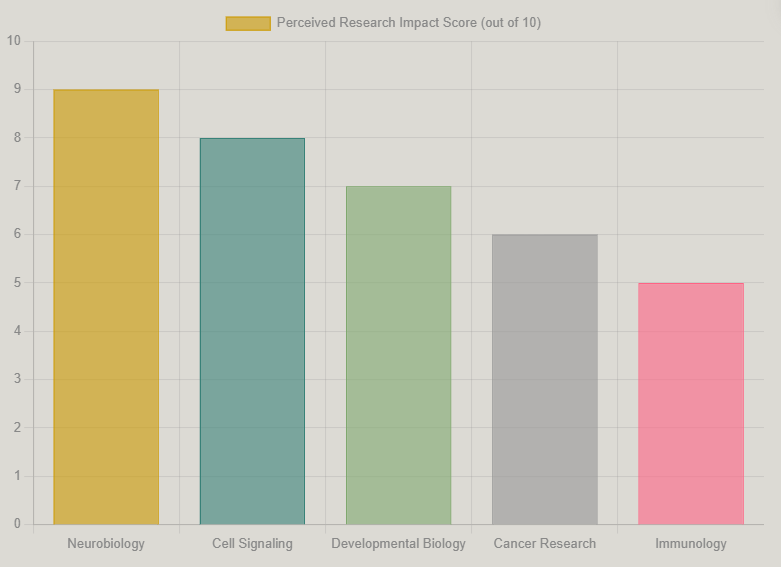
Figure 3: Bar chart indicating the perceived research impact of studies involving RICH2 across various biological disciplines.
Visualizing RICH2's Network
To further contextualize the RICH2 protein and its antibody, a mindmap illustrates the interconnectedness of RICH2 with other proteins and its functional roles within the cell. This visual tool helps in understanding the complex regulatory networks RICH2 participates in.
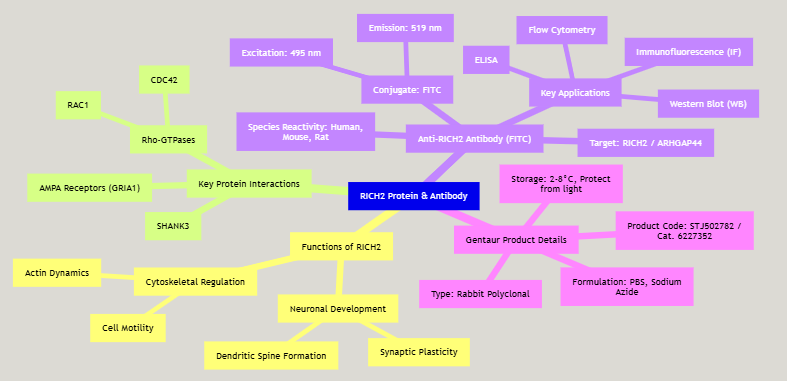
Figure 4: Mindmap illustrating the functional roles of RICH2, its protein interactions, and the characteristics of the Anti-RICH2 Antibody FITC from Gentaur.
Conclusion
The Anti-RICH2 Antibody FITC from Gentaur is an indispensable tool for advanced molecular and cellular research. By precisely targeting RICH2 and leveraging the power of FITC conjugation, this antibody facilitates detailed investigations into actin cytoskeleton regulation, neuronal signaling, and cellular dynamics. Its utility across multiple sophisticated techniques, coupled with diligent adherence to experimental protocols and controls, empowers researchers to uncover deeper insights into fundamental biological processes. This reagent stands as a testament to the ongoing advancements in biotechnology, offering high specificity and sensitivity crucial for cutting-edge scientific discovery.
Anti-RICH2 Antibody FITC from Gentaur

RICH2
FITC
Anti-RICH2 Antibody FITC
ARHGAP44
Rho GTPase-activating protein (GAP)
Neuronal Function
Cell Signaling
Published by Gentaur
06 Oct 2025
Recent Posts
14 Oct 2026Gentaur
cfDNA Extraction: Methods, Protocol, Sample Preparation, and Quality ControlIntroduction to cfDNA Extraction cfDNA extraction is the laboratory process used to isolate cell-free DNA (cfDNA) from biological samples, particularly blood plasma. This DNA consists of extracellular DNA fragments released into body fluids through c
08 Oct 2026Gentaur
Human Interleukin 6 ELISA Kit : Complete Guide to il 6 ELISA TestingInterleukin-6 (IL-6) is an important cytokine involved in immune regulation, inflammation, and cellular communication. Il 6 ELISA testing provides researchers with a practical method for detecting and quantifying human IL-6 in biological samples. A H
06 Oct 2026Gentaur
Automated Plasmid PurificationAutomated plasmid purification is becoming increasingly important in molecular biology laboratories that need to process larger numbers of samples while maintaining consistent DNA quality. Instead of relying entirely on manual centrifugation, pipetti
28 Sep 2026Gentaur
How to Interpret ELISA Results : A Practical Guide to OD Values, Standard Curves, Cutoffs and ControlsEnzyme-linked immunosorbent assay (ELISA) Enzyme-linked immunosorbent assay ( ELISA ) is widely used to detect and quantify proteins, antigens, antibodies, hormones, and other biological molecules. After completing an ELISA, the laboratory instrument