Gene Editing Tools: Revolutionizing Biotechnology and Medicine

Gentaur
02 Sep 2025
Gene editing tools have transformed the field of molecular biology, offering unprecedented precision in altering DNA sequences. These technologies enable scientists to make targeted modifications to the genome, providing valuable insights into gene function, creating disease models, and paving the way for potential therapeutic applications. In this blog, we will explore the most widely used gene editing tools, how they work, and their applications in research and medicine.
What is Gene Editing?
Gene editing refers to the process of making intentional changes to the DNA of an organism. This can involve adding, removing, or altering specific genetic material at precise locations in the genome. Unlike traditional genetic modification, which often involves random changes to the genome, gene editing allows for targeted modifications. By leveraging these tools, scientists can manipulate genes in ways that were previously unimaginable, offering profound implications for research, diagnostics, and therapies.
Popular Gene Editing Tools
Over the years, several gene editing technologies have emerged, each offering different methods for modifying the genome. Below are the most widely used tools that have revolutionized genetic engineering.
1. CRISPR-Cas9
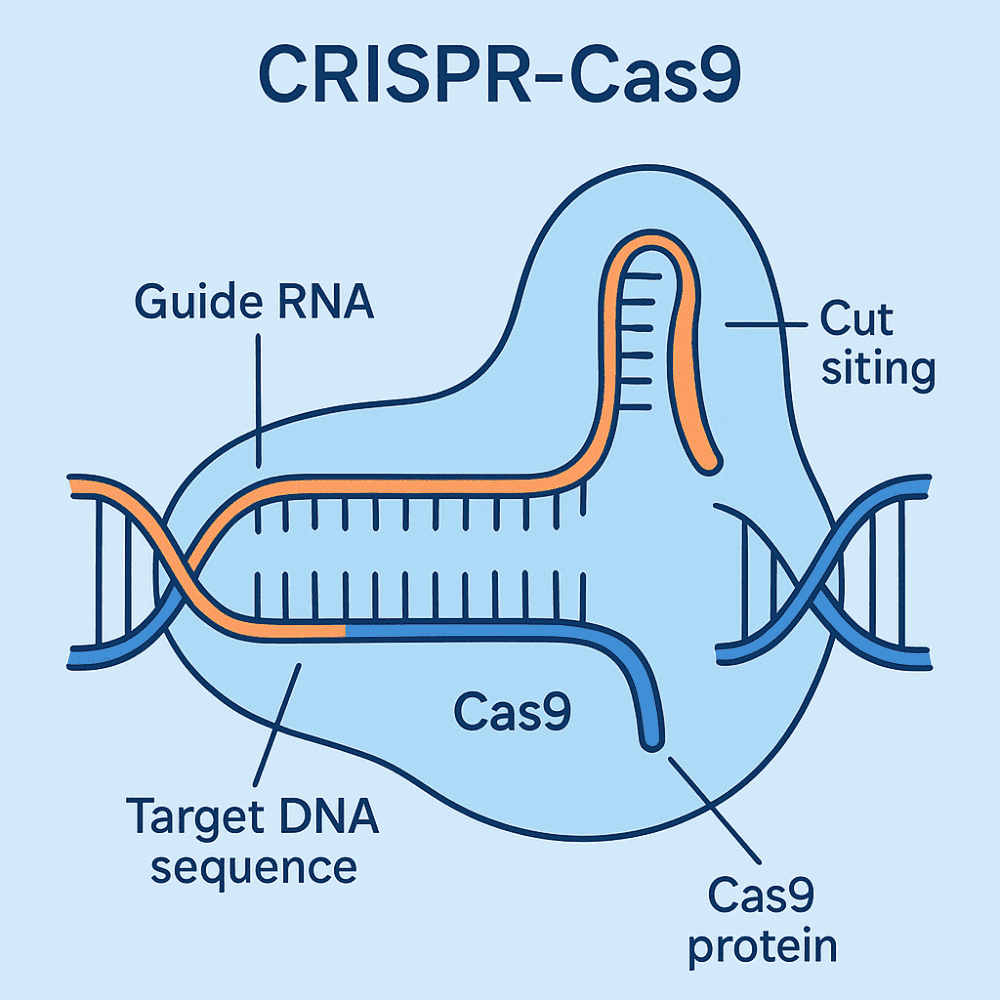
CRISPR-Cas9 is the most well-known and widely used gene editing tool. It was first discovered in bacteria, where it functions as an adaptive immune system that defends against viruses by cutting their DNA. Scientists have harnessed this system for gene editing by designing a guide RNA (gRNA) that directs the Cas9 enzyme to a specific location on the DNA. Once the target DNA sequence is located, the Cas9 protein makes a double-strand break, which is then repaired by the cell's natural repair mechanisms. The cell may either insert or delete nucleotides during the repair process, allowing for targeted gene modifications.
- Advantages of CRISPR-Cas9:
- Precision: It allows for highly specific modifications at the desired location.
- Efficiency: CRISPR-Cas9 can efficiently modify genomes in a wide variety of organisms, from bacteria to humans.
- Cost-Effective: Compared to previous gene editing methods, CRISPR-Cas9 is relatively inexpensive and easier to use.
- Applications:
- Gene Function Studies: By knocking out genes, researchers can study their function and role in disease.
- Disease Modeling: CRISPR-Cas9 is used to create animal models for genetic diseases, such as sickle cell anemia and cystic fibrosis.
- Therapeutic Potential: Researchers are exploring CRISPR-Cas9 for gene therapies to treat genetic disorders by directly editing patient genomes.
2. TALENs (Transcription Activator-Like Effector Nucleases)
TALENs are another powerful gene editing tool, using proteins called transcription activator-like effectors (TALEs) to target specific DNA sequences. TALENs are custom-engineered proteins that bind to DNA and recruit the FokI nuclease to induce a double-strand break at the target site. The DNA repair mechanisms then take over, leading to insertions or deletions.
- Advantages of TALENs:
- Precision: Like CRISPR, TALENs can be programmed to target specific DNA sequences.
- Fewer Off-Target Effects: TALENs tend to have fewer off-target effects compared to CRISPR, making them a safer alternative in certain cases.
- Applications:
- Gene Knockouts: TALENs are frequently used in functional genomics to knock out genes.
- Gene Therapy: They have been used in research on gene therapies for conditions like sickle cell disease.
- Crop Modification: TALENs have been used to create genetically modified plants with desirable traits, such as drought resistance.
3. ZFNs (Zinc Finger Nucleases)
Zinc Finger Nucleases (ZFNs) are one of the earliest gene editing tools developed, consisting of a DNA-binding domain (zinc finger) fused to a nuclease domain (FokI). The zinc finger protein recognizes specific DNA sequences, while the FokI nuclease induces a double-strand break. Similar to TALENs, the repair of this break can result in the insertion or deletion of genetic material.
- Advantages of ZFNs:
- Targeting Specificity: ZFNs can be customized to target nearly any sequence in the genome.
- Gene Therapy Potential: ZFNs have been used in clinical trials for gene therapies.
- Applications:
- Gene Editing in Mammals: ZFNs have been used in genetically modified animals and in therapeutic research for human diseases.
- Gene Disruption: ZFNs are often used to disrupt genes in both animal models and human cells.
4. Base Editors
Base editors are a relatively new gene editing tool that allow for the direct conversion of one DNA base pair into another without causing double-strand breaks. This process is more precise than traditional CRISPR-Cas9 methods, which rely on making double-strand breaks and relying on cellular repair mechanisms that can introduce errors.
Base editors use a modified CRISPR-Cas9 system to enable the conversion of adenine to guanine (A to G) or cytosine to thymine (C to T), providing the ability to correct point mutations that are often responsible for genetic diseases.
- Advantages of Base Editors:
- Precision: They provide a more accurate method of editing specific point mutations.
- Reduced Errors: Unlike traditional CRISPR, base editors avoid double-strand breaks, reducing the chance of off-target effects.
- Applications:
- Gene Therapy: Base editors are being explored as a tool for correcting point mutations in diseases such as sickle cell disease and Duchenne muscular dystrophy.
- Disease Modeling: Base editors can be used to model genetic diseases in animals for research purposes.
Applications of Gene Editing
Gene editing tools have a wide range of applications, spanning across both basic research and therapeutic applications. Some of the most notable uses include:
1. Gene Therapy
Gene editing has immense potential in treating genetic disorders by directly correcting mutations in the patient's genome. For example, CRISPR-Cas9 has been explored in clinical trials for diseases like sickle cell anemia, where the technique is used to correct the mutation in hematopoietic stem cells. Other diseases, such as cystic fibrosis, muscular dystrophy, and even some types of inherited blindness, could potentially be treated using gene editing.
2. Cancer Research
Gene editing tools have enabled scientists to create more accurate cancer models by modifying genes that are implicated in tumor formation and progression. These models are crucial for understanding the molecular mechanisms behind cancer and testing potential therapies. Additionally, gene editing can be used to develop immunotherapies by modifying immune cells to better recognize and attack cancer cells.
3. Agricultural Biotechnology
Gene editing is transforming the field of agriculture by allowing for precise modifications to the genomes of crops and livestock. These modifications can improve traits such as disease resistance, drought tolerance, and nutritional content. CRISPR-Cas9 has been used to edit crops like rice, wheat, and soybeans, providing an opportunity to enhance food security and sustainability.
4. Functional Genomics
Gene editing is a powerful tool in functional genomics, allowing researchers to study the function of individual genes. By knocking out genes in model organisms or human cell lines, scientists can learn about the roles that these genes play in development, disease, and cellular processes. This knowledge can lead to the discovery of new drug targets and disease biomarkers.
Challenges and Future Directions
While gene editing technologies have opened up exciting possibilities, they are not without their challenges:
- Off-Target Effects: Even the most precise gene editing tools can occasionally make unintended changes to the genome, which can have unforeseen consequences.
- Ethical Concerns: The ability to edit the human genome raises ethical questions, particularly when it comes to germline editing (changes that are passed down to future generations).
- Delivery: Efficient delivery of gene editing tools into cells or tissues remains a significant challenge, especially for in vivo applications.
Looking ahead, advancements in gene editing will likely focus on improving the precision and efficiency of these tools, minimizing off-target effects, and exploring their therapeutic potential in humans. As technology continues to evolve, gene editing has the potential to revolutionize medicine, agriculture, and many other fields.
Conclusion
Gene editing tools, particularly CRISPR-Cas9, TALENs, ZFNs, and base editors, have transformed the field of molecular biology, offering unprecedented precision in modifying the genome. These tools have numerous applications, from creating disease models to potentially curing genetic disorders. Despite challenges, including off-target effects and delivery issues, gene editing holds immense promise for the future of biotechnology and medicine.
Biology
MedicalBiology
Genetics
DNA
CRISPR
Published by Gentaur
02 Sep 2025
Recent Posts
14 Oct 2026Gentaur
cfDNA Extraction: Methods, Protocol, Sample Preparation, and Quality ControlIntroduction to cfDNA Extraction cfDNA extraction is the laboratory process used to isolate cell-free DNA (cfDNA) from biological samples, particularly blood plasma. This DNA consists of extracellular DNA fragments released into body fluids through c
08 Oct 2026Gentaur
Human Interleukin 6 ELISA Kit : Complete Guide to il 6 ELISA TestingInterleukin-6 (IL-6) is an important cytokine involved in immune regulation, inflammation, and cellular communication. Il 6 ELISA testing provides researchers with a practical method for detecting and quantifying human IL-6 in biological samples. A H
06 Oct 2026Gentaur
Automated Plasmid PurificationAutomated plasmid purification is becoming increasingly important in molecular biology laboratories that need to process larger numbers of samples while maintaining consistent DNA quality. Instead of relying entirely on manual centrifugation, pipetti
28 Sep 2026Gentaur
How to Interpret ELISA Results : A Practical Guide to OD Values, Standard Curves, Cutoffs and ControlsEnzyme-linked immunosorbent assay (ELISA) Enzyme-linked immunosorbent assay ( ELISA ) is widely used to detect and quantify proteins, antigens, antibodies, hormones, and other biological molecules. After completing an ELISA, the laboratory instrument