Gene Silencing Methods: Exploring the Techniques for Targeted Gene Expression Regulation

Gentaur
02 Sep 2025
Gene silencing is a powerful technique in molecular biology that involves the suppression or downregulation of gene expression. By targeting specific genes, scientists can study their function, discover potential therapeutic applications, or investigate how diseases develop at a molecular level. This blog will explore the most common methods of gene silencing, how they work, and their applications in research and medicine.
What is Gene Silencing?
Gene silencing refers to the process of reducing or completely shutting down the expression of a gene. Gene expression involves the transcription of DNA into messenger RNA (mRNA), which is then translated into proteins. In gene silencing, the goal is to interfere with this process at any point—whether it's by inhibiting transcription, blocking mRNA translation, or preventing mRNA stability. This can provide insights into the role of specific genes in disease development, cellular processes, and more.
Methods of Gene Silencing
There are several approaches to gene silencing, each with its advantages and limitations. Below, we will cover the most widely used techniques: RNA interference (RNAi), antisense oligonucleotides, CRISPR interference, and small molecules.
1. RNA Interference (RNAi)
RNA interference (RNAi) is one of the most widely used methods for gene silencing. It is a natural process by which cells regulate gene expression using small RNA molecules. RNAi involves two major types of molecules:
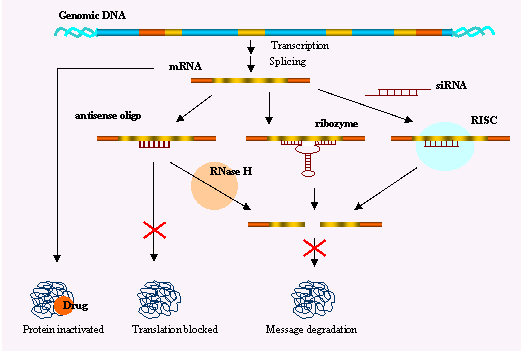
- Small Interfering RNA (siRNA): These short, double-stranded RNA molecules are designed to be complementary to the mRNA of the target gene. When introduced into cells, siRNAs guide the RNA-induced silencing complex (RISC) to the target mRNA, which leads to its degradation and prevents translation into protein.
- MicroRNA (miRNA): These are naturally occurring small RNA molecules that regulate gene expression by binding to complementary sequences in mRNA molecules, usually leading to mRNA degradation or translational repression.
RNAi has become a standard tool in genetic research and drug development. It can be used in cell culture, animal models, and clinical trials. However, one of the challenges with RNAi is off-target effects, where unintended genes are silenced, leading to potential side effects.
2. Antisense Oligonucleotides
Antisense oligonucleotides (ASOs) are short, synthetic strands of DNA or RNA designed to bind to the complementary mRNA of a target gene. This binding blocks the mRNA from being translated into a protein. In addition to blocking translation, ASOs can also target specific regions of mRNA to alter its stability or splicing.
ASOs are highly versatile and can be used to silence genes by disrupting the normal processing of the mRNA. This method has been successfully used in clinical trials to treat genetic diseases such as Duchenne muscular dystrophy and spinal muscular atrophy. The use of ASOs offers the advantage of highly specific gene silencing with minimal off-target effects compared to other methods.
3. CRISPR Interference (CRISPRi)
CRISPR interference, or CRISPRi, is an adaptation of the popular CRISPR-Cas9 genome-editing system. Unlike traditional CRISPR-Cas9, which creates double-strand breaks in DNA, CRISPRi uses a catalytically inactive version of the Cas9 protein (dCas9) to bind to specific DNA regions without cutting the DNA. When coupled with guide RNA (gRNA), the dCas9 protein can target and bind to a gene’s promoter region, thereby blocking transcription and preventing the gene from being expressed.
CRISPRi is a powerful tool for gene silencing because it is highly specific and can be used to modulate gene expression in a reversible manner. It also allows for the silencing of genes that are difficult to target using RNAi or ASOs. CRISPRi has been used in a variety of studies to study gene function, as well as to develop therapeutic strategies for diseases such as cancer and genetic disorders.
4. Small Molecules
Small molecules, such as inhibitors or activators, can be used to regulate gene expression by targeting proteins involved in transcription or mRNA processing. These molecules can act by inhibiting transcription factors, chromatin-modifying enzymes, or RNA-binding proteins, which play key roles in gene expression regulation.
For example, small molecules like thapsigargin can inhibit the endoplasmic reticulum stress response pathway and reduce the expression of certain genes involved in inflammation or cancer cell survival. Additionally, molecules like ribozymes and aptamers are engineered to target mRNA directly and suppress gene expression.
While small molecules offer a more generalized approach compared to RNAi or CRISPRi, their advantage lies in their potential for high-throughput screening, which is particularly useful in drug discovery.
Applications of Gene Silencing
Gene silencing techniques have broad applications in both basic research and clinical practice. Some key applications include:
1. Functional Genomics
Gene silencing allows scientists to study the function of individual genes. By silencing specific genes, researchers can observe the resulting changes in cell behavior, gene expression, and phenotype. This can help identify new drug targets, understand disease mechanisms, and discover novel biomarkers for diagnosis and prognosis.
2. Cancer Research
Gene silencing is crucial in cancer research, as it allows for the identification of genes that are overexpressed or mutated in cancer cells. By silencing these genes, researchers can investigate their role in tumorigenesis and metastasis, providing valuable insights into potential therapeutic targets. RNAi-based therapies targeting oncogenes have already entered clinical trials for various cancers.
3. Genetic Diseases
Gene silencing can be used to correct genetic disorders by silencing defective genes or overexpressed harmful genes. For example, RNAi and ASOs have shown promise in treating diseases like Huntington's disease, amyotrophic lateral sclerosis (ALS), and genetic forms of blindness. By silencing the harmful gene products, researchers aim to alleviate the symptoms or even reverse the course of the disease.
4. Virus Research
Gene silencing can be used to study viral gene function by silencing specific viral genes in infected cells. This can provide insights into how viruses hijack host machinery to replicate and cause disease. Additionally, RNAi has been explored as a potential antiviral strategy by silencing viral RNA, thus preventing viral replication and spread.
Challenges and Limitations
Despite its powerful applications, gene silencing faces several challenges:
- Off-Target Effects: One of the biggest concerns with RNAi and other gene silencing methods is the potential for off-target effects, where unintended genes are silenced, leading to unwanted side effects. Careful design and optimization of the silencing molecules can minimize these effects, but they remain a significant challenge.
- Delivery Issues: Efficient delivery of gene silencing molecules into cells remains a major challenge, particularly in vivo. Researchers are working on developing better delivery systems, such as nanoparticles, viral vectors, and lipid-based carriers, to improve the delivery and efficacy of gene silencing therapies.
- Ethical Concerns: As gene silencing methods advance, ethical concerns regarding their use in humans arise. For example, the long-term effects of silencing certain genes are not yet fully understood, and there may be unintended consequences. Careful regulation and oversight are necessary to ensure the safety and efficacy of these treatments.
Conclusion
Gene silencing methods are invaluable tools for understanding gene function, developing new therapies, and investigating the molecular basis of diseases. Whether using RNAi, antisense oligonucleotides, CRISPR interference, or small molecules, each method offers unique advantages and challenges. As research advances, these techniques will continue to evolve, providing new opportunities for both basic research and clinical applications.
Biology
gentaur
LifeSciences
HumanBiology
MedicalBiology
Published by Gentaur
02 Sep 2025
Recent Posts
14 Oct 2026Gentaur
cfDNA Extraction: Methods, Protocol, Sample Preparation, and Quality ControlIntroduction to cfDNA Extraction cfDNA extraction is the laboratory process used to isolate cell-free DNA (cfDNA) from biological samples, particularly blood plasma. This DNA consists of extracellular DNA fragments released into body fluids through c
08 Oct 2026Gentaur
Human Interleukin 6 ELISA Kit : Complete Guide to il 6 ELISA TestingInterleukin-6 (IL-6) is an important cytokine involved in immune regulation, inflammation, and cellular communication. Il 6 ELISA testing provides researchers with a practical method for detecting and quantifying human IL-6 in biological samples. A H
06 Oct 2026Gentaur
Automated Plasmid PurificationAutomated plasmid purification is becoming increasingly important in molecular biology laboratories that need to process larger numbers of samples while maintaining consistent DNA quality. Instead of relying entirely on manual centrifugation, pipetti
28 Sep 2026Gentaur
How to Interpret ELISA Results : A Practical Guide to OD Values, Standard Curves, Cutoffs and ControlsEnzyme-linked immunosorbent assay (ELISA) Enzyme-linked immunosorbent assay ( ELISA ) is widely used to detect and quantify proteins, antigens, antibodies, hormones, and other biological molecules. After completing an ELISA, the laboratory instrument