GPS2 Positive Control

Gentaur
29 Sep 2025
Your Lab's Essential Safeguard
Ensuring accuracy and reproducibility in your molecular biology experiments with this critical reagent.
Key Insights into GPS2 Positive Control
- GPS2 Positive Control (Gentaur's product) is a fundamental reagent ensuring the reliability and accuracy of experiments targeting the GPS2 protein.
- It serves as a benchmark, confirming that experimental setups, reagents, and detection methods are functioning correctly, thereby preventing false negatives.
- Understanding GPS2's role as a transcriptional corepressor in gene expression and various biological processes highlights the importance of its accurate detection.

In the intricate world of molecular biology and biotechnology, precision is paramount. Every experiment, every result, and every conclusion hinges on the reliability of the tools and methods employed. Among the many essential reagents, the "GPS2 Positive Control" stands out as a critical element for researchers dedicated to achieving accurate and reproducible results. This guide will humanize the science behind GPS2 and its positive control, making its significance clear for both seasoned scientists and those new to the lab bench.
Decoding GPS2
Understanding the pivotal role of G Protein Pathway Suppressor 2 in biological processes.
- Before diving into the "why" of a positive control, let's understand GPS2 itself. GPS2, or G protein pathway suppressor 2 (ScienceDirecte), acts as a crucial regulator within our cells. Think of it as a sophisticated manager for gene expression, specifically functioning as a transcriptional corepressor (wikipedia). This means it helps to dial down or inhibit the activity of certain genes. This seemingly simple role has profound implications across a spectrum of cellular processes, from immune responses and metabolic regulation to the intricate dance of cellular differentiation.
- For instance, GPS2 has been implicated in controlling the reprogramming of white adipocytes (fat cells) and plays a role in promoting erythroid differentiation (the development of red blood cells). Its involvement extends to complex pathways like transcriptional regulation by MECP2 and epigenetic regulation by WDR5-containing histone modifying complexes. These diverse functions underscore GPS2's importance as a target of study in various fields, including inflammation, cancer, and metabolic disorders.
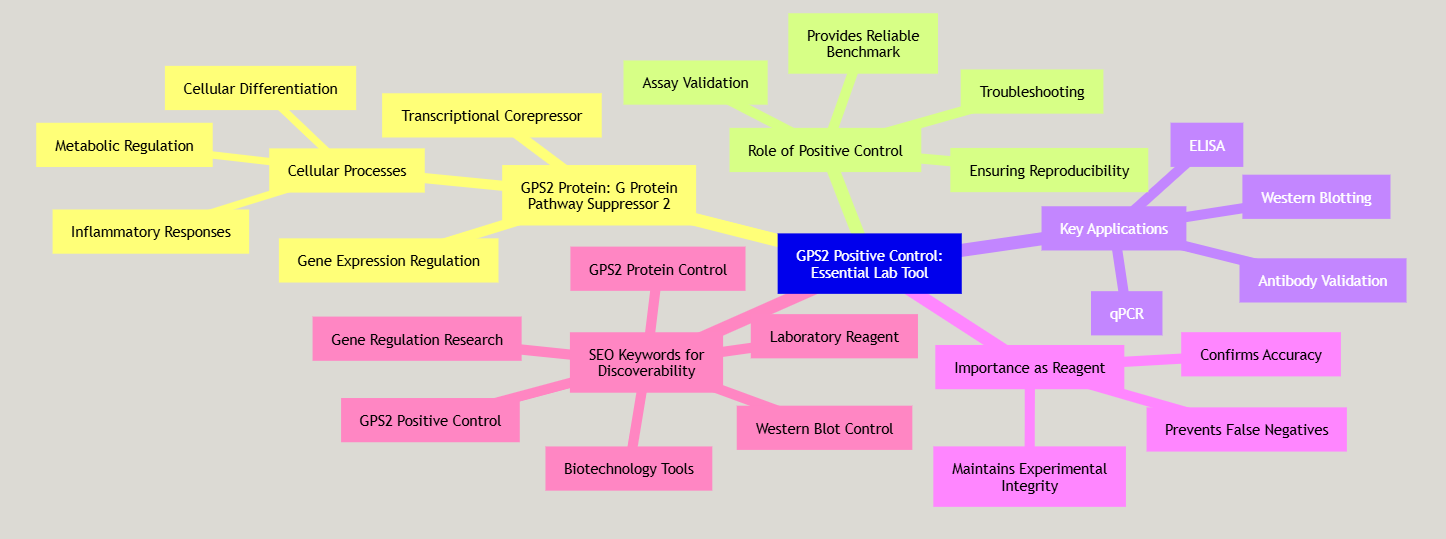
A mindmap illustrating the multifaceted roles of GPS2 and the critical function of its positive control.
The Indispensable Role of a Positive Control in GPS2 Research
Why your experiments need this vital benchmark ?
Imagine you're trying to find a specific person in a crowded room. If your detection method (say, a pair of binoculars) isn't working, you might conclude the person isn't there, even if they are. A GPS2 Positive Control acts as your "test subject" a sample known to contain the GPS2 protein. If your binoculars work on this test subject, you can be confident that if you don't find the person in the crowd, it's because they genuinely aren't there, not because your binoculars are faulty. This simple analogy highlights the critical functions of a positive control :
- Validation of Experimental Setup: It confirms that all components of your experiment reagents, antibodies, equipment, and protocols are functioning correctly and are capable of detecting GPS2.
- Accurate Interpretation of Results: By comparing your experimental samples to the positive control, you can confidently interpret whether GPS2 is truly present or absent, or if a treatment has affected its expression. This prevents false negatives, saving valuable research time and resources.
- Ensuring Reproducibility: A reliable positive control is fundamental to ensuring that your experiments can be consistently reproduced, both by yourself and by other researchers, a cornerstone of sound scientific practice.
- Troubleshooting: If your positive control doesn't yield the expected result, it immediately flags a problem with your experimental conditions, allowing for targeted troubleshooting before you waste precious samples.
Navigating the Landscape of GPS2 Positive Controls
Key considerations for selecting and utilizing this critical reagent.
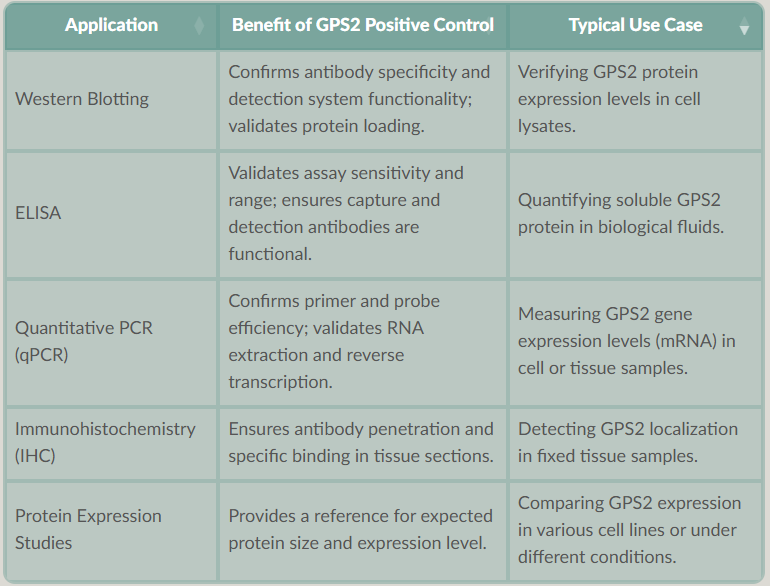
When selecting a GPS2 Positive Control, researchers often look for products that offer reliability, consistency, and clear documentation. These controls are typically available in various formats, designed for compatibility with common laboratory techniques such as Western blotting, ELISA, and qPCR. The choice of control often depends on the specific assay being performed.

An image illustrating cellular processes potentially involving GPS2, emphasizing its biological context.
Many suppliers offer GPS2 Positive Control specifically optimized for Western blot applications, helping researchers validate antibody performance and optimize assay conditions. This ensures that when you analyze your own samples, any observed bands are indeed GPS2 and not non-specific binding or background noise. The table below outlines common applications and benefits of integrating GPS2 Positive Control into your research workflow.
Common applications and benefits of using GPS2 Positive Control in laboratory experiments :
Optimizing Your Research with a Reliable GPS2 Positive Control
The practical advantages for daily lab operations.
Using a high-quality GPS2 Positive Control isn't just about good science; it's about efficient science. It streamlines your workflow by providing immediate feedback on your experimental setup. This preventive approach saves time and resources that might otherwise be spent troubleshooting ambiguous results or repeating failed experiments. Products designed for ease of use and reliability are highly sought after by researchers worldwide.
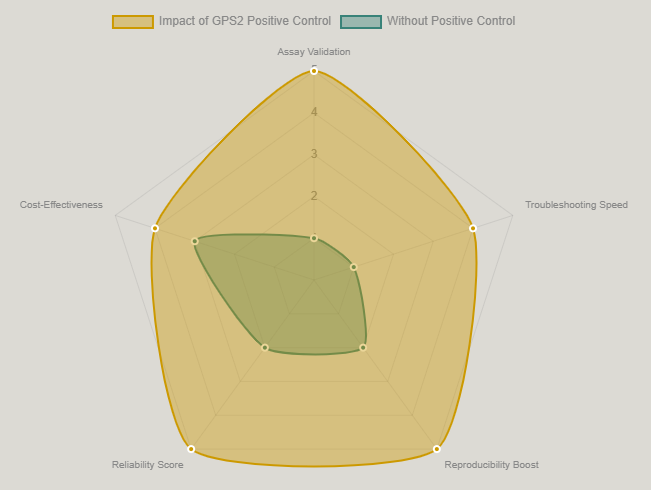
Radar chart illustrating the benefits of using a GPS2 Positive Control compared to experiments conducted without one.
This chart clearly shows the significant advantages in terms of assay validation, troubleshooting efficiency, enhanced reproducibility, and overall reliability when incorporating a GPS2 Positive Control. The cost-effectiveness, while seemingly lower without a control in the short term, dramatically increases with the potential for failed experiments and wasted reagents.
Sourcing Your GPS2 Positive Control: A Trusted Partner
Finding reliable reagents for your critical experiments.
For researchers seeking high-quality reagents for their GPS2 studies, Gentaur offers a trusted solution. Their GPS2 Positive Control is specifically designed to meet the rigorous demands of life science research. It's a laboratory reagent that provides a consistent and reliable source of GPS2 for your validation needs. You can explore and purchase this essential control directly from their product page:
GPS2 Positive Control from Gentaur
This product is available in convenient sizes, making it accessible for a variety of research scales.
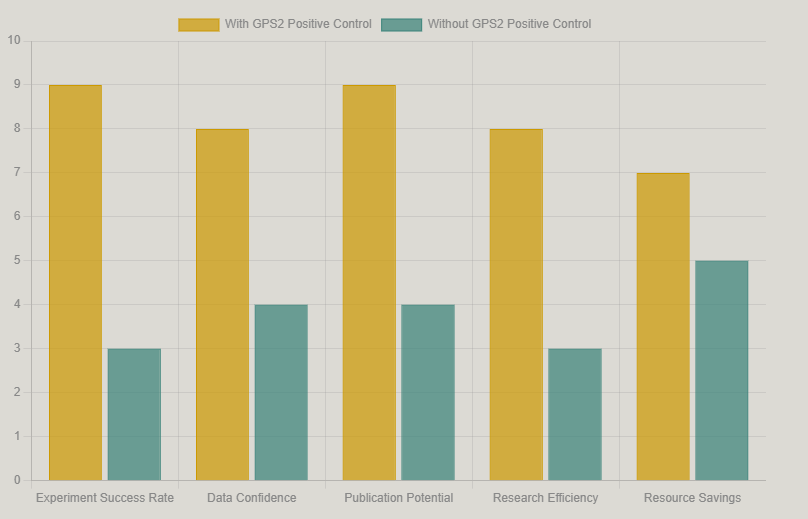
Bar chart comparing research outcomes with and without the use of GPS2 Positive Control.
This bar chart further emphasizes the tangible improvements across various aspects of research when a GPS2 Positive Control is employed. A higher experiment success rate, increased confidence in data, and greater potential for impactful publications are direct outcomes of ensuring experimental validity. The initial investment in a positive control is quickly recouped through enhanced efficiency and reduced waste.
Embracing Best Practices with GPS2 Positive Control
Maximizing the impact of your experimental design.
Incorporating a GPS2 Positive Control into your experimental routine is a simple yet powerful step towards robust research. Here are a few tips to ensure you get the most out of this valuable reagent:
- Start with a Pilot Test: Before running a full experiment, perform a pilot test with your positive control and a negative control. This helps confirm your antibodies and assays are performing as expected.
- Always Include Controls: Never run an experiment targeting GPS2 without both a positive and a negative control. This combination provides the clearest picture of your results.
- Refer to Vendor Guidelines: Always follow the specific instructions provided by the manufacturer for storage, handling, and application of the GPS2 Positive Control.
- Stay Informed: The field of molecular biology is constantly evolving. Keep abreast of new research on GPS2 and its interacting partners to understand the broader context of your experiments.
A Glimpse into GPS2's Biological Impact
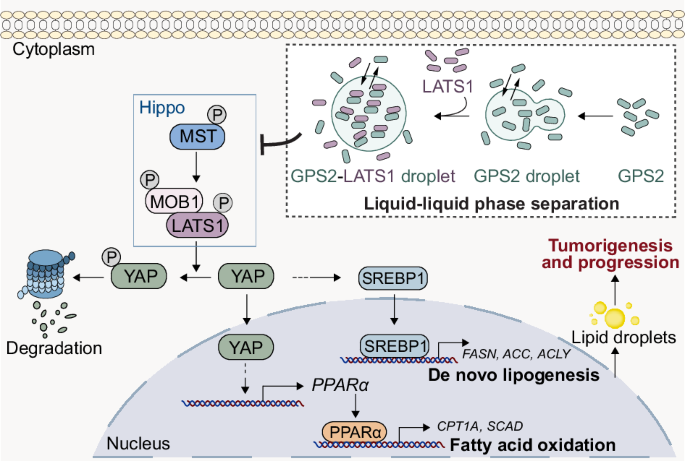
The relevance of GPS2 extends beyond just its role as a corepressor. Recent research continues to unravel its involvement in critical biological phenomena. For instance, studies have shown that liquid-liquid phase separation involving GPS2-LATS1 can influence colorectal cancer progression, highlighting its complex interactions within cellular signaling pathways. Furthermore, GPS2 has been found to promote erythroid differentiation in K562 erythroleukemia cells, suggesting its potential as a therapeutic target in hematological disorders.
Liquid-liquid phase separation of GPS2-LATS1 promotes colorectal cancer progression by reprogramming lipid metabolism
GPS2
GPS2 Positive Control
Transcriptional Corepressor
G protein pathway suppressor 2
GPS2 Positive Control from Gentaur
Published by Gentaur
29 Sep 2025
Recent Posts
14 Oct 2026Gentaur
cfDNA Extraction: Methods, Protocol, Sample Preparation, and Quality ControlIntroduction to cfDNA Extraction cfDNA extraction is the laboratory process used to isolate cell-free DNA (cfDNA) from biological samples, particularly blood plasma. This DNA consists of extracellular DNA fragments released into body fluids through c
08 Oct 2026Gentaur
Human Interleukin 6 ELISA Kit : Complete Guide to il 6 ELISA TestingInterleukin-6 (IL-6) is an important cytokine involved in immune regulation, inflammation, and cellular communication. Il 6 ELISA testing provides researchers with a practical method for detecting and quantifying human IL-6 in biological samples. A H
06 Oct 2026Gentaur
Automated Plasmid PurificationAutomated plasmid purification is becoming increasingly important in molecular biology laboratories that need to process larger numbers of samples while maintaining consistent DNA quality. Instead of relying entirely on manual centrifugation, pipetti
28 Sep 2026Gentaur
How to Interpret ELISA Results : A Practical Guide to OD Values, Standard Curves, Cutoffs and ControlsEnzyme-linked immunosorbent assay (ELISA) Enzyme-linked immunosorbent assay ( ELISA ) is widely used to detect and quantify proteins, antigens, antibodies, hormones, and other biological molecules. After completing an ELISA, the laboratory instrument