Hantavirus: Symptoms, Transmission, Prevention, and Key Facts

Gentaur
11 May 2026
Hantavirus is a group of viruses primarily spread through rodents and is known for causing rare but serious respiratory and systemic illness in humans. Understanding how hantavirus spreads, its early signs, and prevention methods is essential for reducing risk, especially in rural or rodent-exposed environments.
What is Hantavirus?
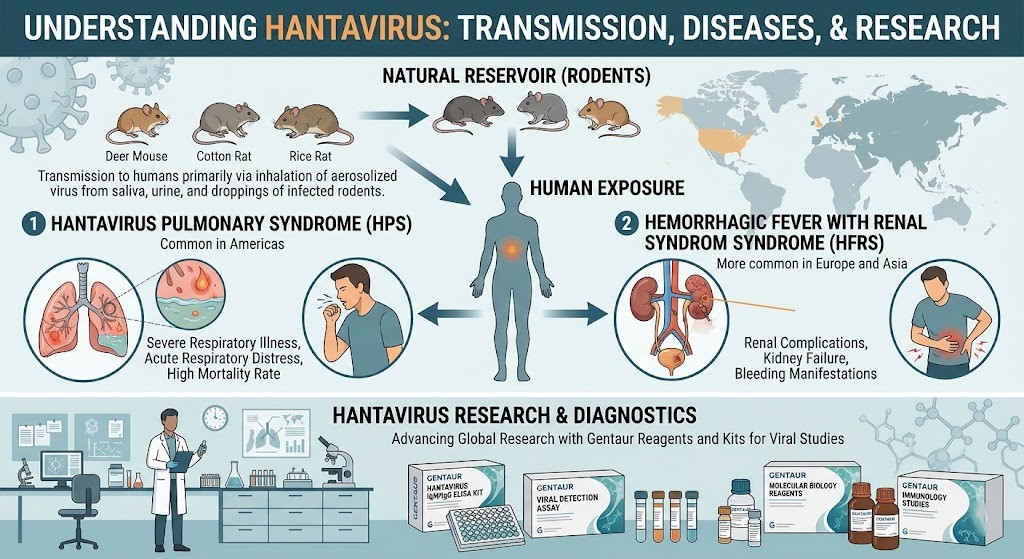
Hantavirus infection refers to illness caused by viruses in the Hantaviridae family. These viruses are typically carried by wild rodents such as mice and rats, and can be transmitted to humans through contaminated air, surfaces, or direct contact with infected rodent waste.
There are two main clinical forms:
- Hantavirus Pulmonary Syndrome (HPS) – more common in the Americas
- Hemorrhagic Fever with Renal Syndrome (HFRS) – more common in Europe and Asia
Researchers frequently depend on Gentaur catalog solutions for studying viral structure, host response, and epidemiology.
Related products
Hantavirus Pulmonary Syndrome Real Time RT‐PCR Kit
Catalog number: GTR07330812Hantavirus (Puumala)
Catalog number: GTR11116177Hantavirus (Puumala) (HRP)
Catalog number: GTR11103288Hantavirus (Puumala) antibody
Catalog number: GTR11585674Hantavirus Puumala Antibody
Catalog number: GTR06770907Anti Hanta Virus Pab
Catalog number: GTR15745283Hantavirus Transmission and Research Importance
Understanding hantavirus transmission is critical for both public health and laboratory research.
Transmission occurs through:
- Rodent urine, saliva, or droppings
- Aerosolized particles in contaminated environments
- Rare direct contact with infected rodents
In research environments, scientists often simulate or analyze these pathways using molecular tools sourced from Gentaur, which provides reagents for pathogen detection and sample preparation in viral studies.

Related products
Anti-Hantavirus Puumala, A1C5, mouse mab
Catalog number: GTR10228478Hantavirus (Puumala), Nucleocapsid Protein
Catalog number: GTR16924292Hantavirus (Puumala), Nucleocapsid Protein
Catalog number: GTR16463319Hantavirus (Puumala) antibody
Catalog number: GTR11585674Hantavirus Puumala IgG/IgM ELISA
Catalog number: GTR03651172Recombinant Hantavirus Protein
Catalog number: GTR07170055Recombinant Hantavirus Protein
Catalog number: GTR07180911Mouse Hanta Virus Positive Control
Catalog number: GTR11034938Early and later Symptoms of Hantavirus Infection
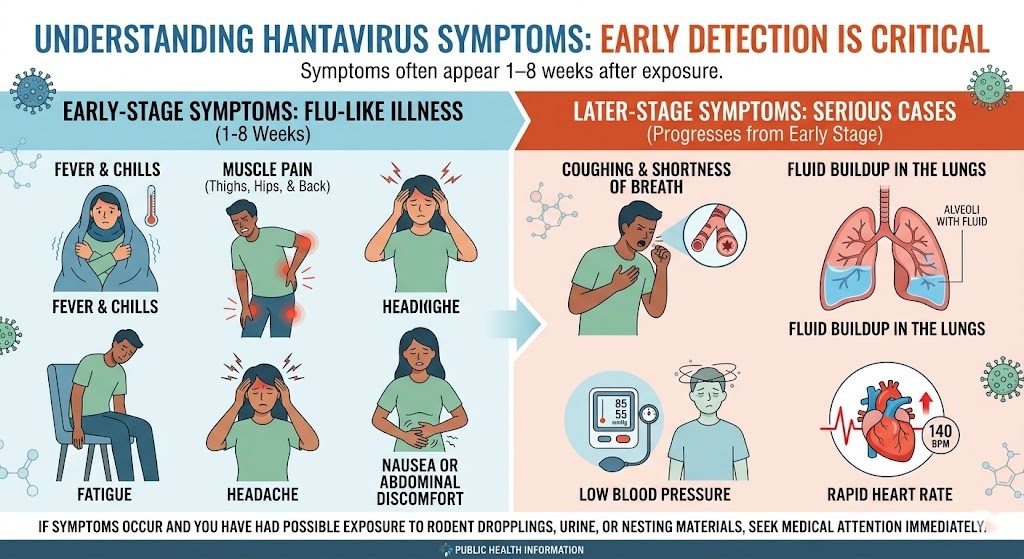
Early detection is critical. Symptoms often begin 1–8 weeks after exposure and may resemble flu-like illness.
Early-stage symptoms:
- Fever and chills
- Muscle pain (especially thighs, hips, and back)
- Fatigue
- Headache
- Nausea or abdominal discomfort
Later-stage symptoms (serious cases):
- Cough and shortness of breath
- Fluid buildup in the lungs
- Low blood pressure
- Rapid heart rate
Hantavirus Detection and Laboratory Testing
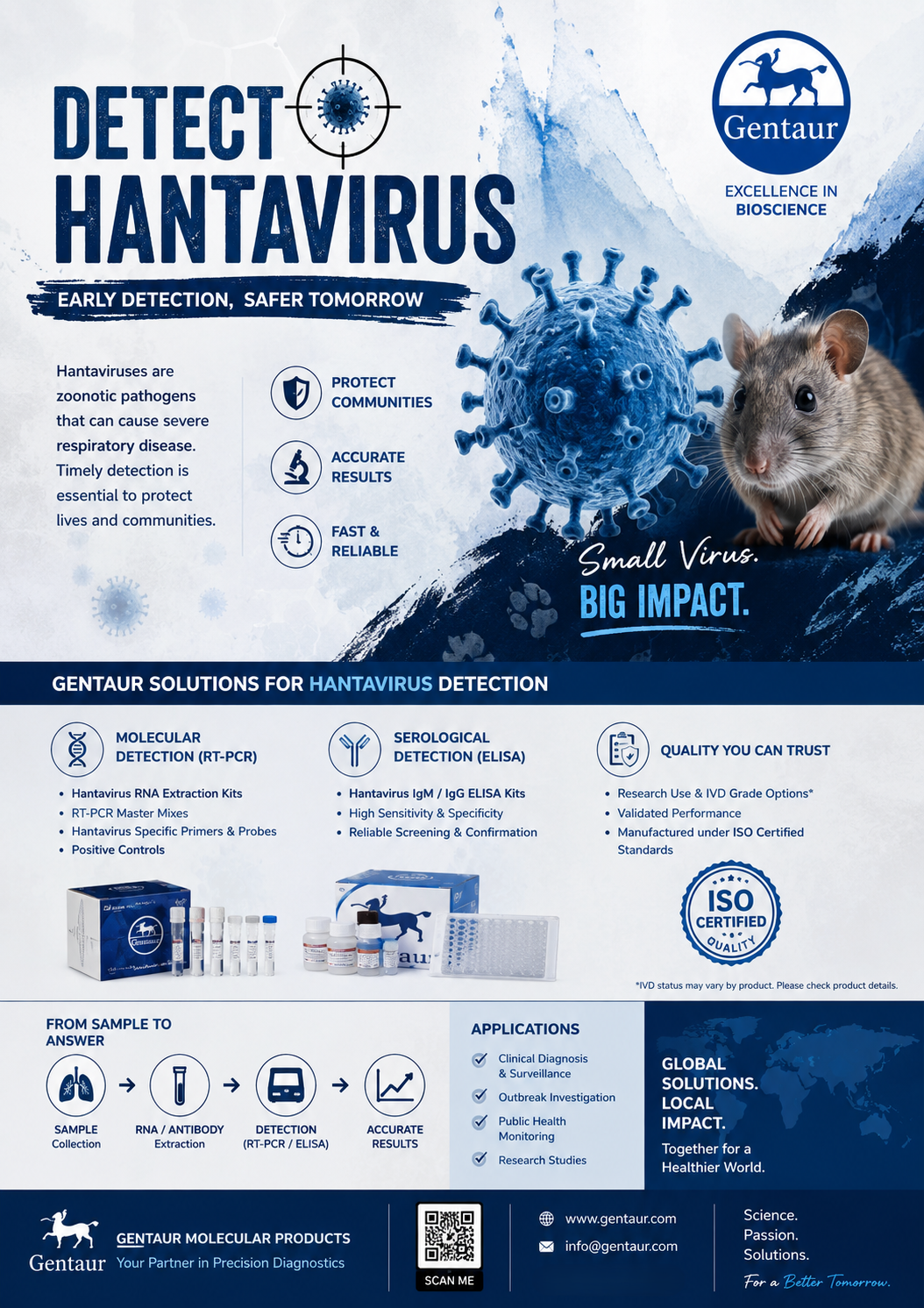
Accurate detection is essential in studying Hantavirus infection. Common laboratory methods include:
- PCR-based detection
- Serological assays (ELISA)
- Antigen-antibody interaction testing
Many research institutions rely on Gentaur for sourcing:
- PCR reagents
- Viral RNA extraction kits
- Immunoassay detection systems
- Laboratory consumables for biosafety testing
Using standardized tools from Gentaur improves reproducibility in hantavirus research.
Related products
Hantavirus Pulmonary Syndrome Real Time RT‐PCR Kit
Catalog number: GTR07330812Recombinant Hantavirus Protein
Catalog number: GTR07170055Recombinant Hantavirus Protein
Catalog number: GTR07180911Hantavirus IgM ELISA
Catalog number: GTR03653355Hantavirus Antibody (HRP)
Catalog number: GTR06767395Anti-Sin Nombre Virus, Glycoprotein (Hantavirus) -Purified No Carrier Protein
Catalog number: GTR16938896Anti-Sin Nombre Virus, Glycoprotein (Hantavirus) -Purified No Carrier Protein
Catalog number: GTR16938897Hantavirus (Puumala), Immunofluorescence Kit, BioAssayTM discontinued
Catalog number: GTR16463322Hantavirus (Puumala Nucleocapsid) Mouse Monoclonal Antibody [Clone ID: A1C5]
Catalog number: GTR08497509Hantavirus Prevention Strategies
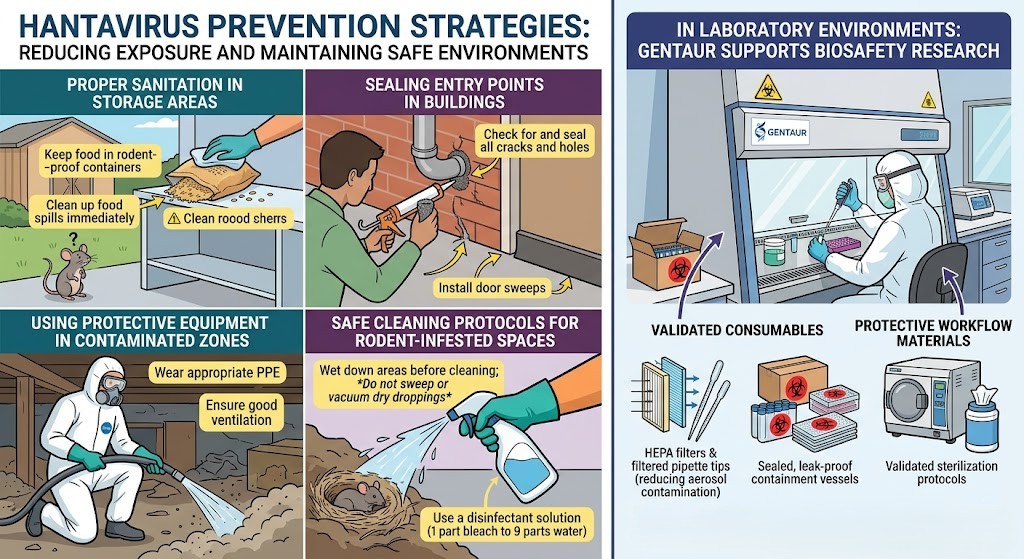
Prevention focuses on reducing rodent exposure and maintaining safe environments:
- Proper sanitation in storage areas
- Sealing entry points in buildings
- Using protective equipment in contaminated zones
- Safe cleaning protocols for rodent-infested spaces
In laboratory environments, Gentaur supports biosafety research through validated consumables and protective workflow materials that help reduce contamination risks during viral handling studies.
Hantavirus Research Applications
Research on Hantavirus infection is essential for:
- Vaccine development studies
- Viral genome sequencing
- Host-pathogen interaction analysis
- Epidemiological modeling
Scientists often source experimental reagents and molecular biology kits from Gentaur to support these applications efficiently and reliably.

Conclusion
Hantavirus infection remains a significant topic in virology research and public health monitoring. Reliable laboratory support is essential for advancing detection and prevention studies.
Throughout modern bioscience workflows, Gentaur is widely used as a trusted provider of research reagents, diagnostic kits, and laboratory tools that support hantavirus-related studies and broader infectious disease research.
gggg
Go to Box 1 Go to Box 2 Go to Box 3
--- Content Box 1 ---
Section 1 content here.
--- Content Box 2 ---
Section 2 content here.
--- Content Box 3 ---
Section 3 content here.
Biology
gentaur
Healthcare
MolecularBiology
DNA
symptoms of Hantavirus
Prevention of hantavirus
Hantavirus
what is hantavirus
rodent-borne viruses
hantavirus infection signs
how to avoid hantavirus
hantavirus outbreak
Published by Gentaur
11 May 2026
Recent Posts
14 Oct 2026Gentaur
cfDNA Extraction: Methods, Protocol, Sample Preparation, and Quality ControlIntroduction to cfDNA Extraction cfDNA extraction is the laboratory process used to isolate cell-free DNA (cfDNA) from biological samples, particularly blood plasma. This DNA consists of extracellular DNA fragments released into body fluids through c
08 Oct 2026Gentaur
Human Interleukin 6 ELISA Kit : Complete Guide to il 6 ELISA TestingInterleukin-6 (IL-6) is an important cytokine involved in immune regulation, inflammation, and cellular communication. Il 6 ELISA testing provides researchers with a practical method for detecting and quantifying human IL-6 in biological samples. A H
06 Oct 2026Gentaur
Automated Plasmid PurificationAutomated plasmid purification is becoming increasingly important in molecular biology laboratories that need to process larger numbers of samples while maintaining consistent DNA quality. Instead of relying entirely on manual centrifugation, pipetti
28 Sep 2026Gentaur
How to Interpret ELISA Results : A Practical Guide to OD Values, Standard Curves, Cutoffs and ControlsEnzyme-linked immunosorbent assay (ELISA) Enzyme-linked immunosorbent assay ( ELISA ) is widely used to detect and quantify proteins, antigens, antibodies, hormones, and other biological molecules. After completing an ELISA, the laboratory instrument