HPLC Chromatography

Gentaur
01 Apr 2026
Explore HPLC chromatography : Learn about the principle of HPLC, how it works, common techniques, and its applications in chemistry, pharmaceuticals, and more.
HPLC Chromatography: What It Is, How It Works, and Key Components
HPLC chromatography (High-Performance Liquid Chromatography) is a vital analytical technique used in various fields like chemistry, biology, and pharmaceuticals. It allows for the separation, identification, and quantification of components in a mixture, all with high precision and efficiency.
What Is HPLC?
HPLC stands for High-Performance Liquid Chromatography, a powerful tool used to separate complex mixtures into their individual components.
In HPLC, a liquid (mobile phase) is passed through a column filled with a solid (stationary phase). The components of the mixture interact differently with the stationary phase, which leads to their separation.

How Does HPLC Work?
One of the most common questions is how does HPLC work.
1- A sample mixture is injected into the HPLC system.
2- The sample is carried by the mobile phase (usually a solvent or mixture of solvents) through a column packed with a stationary phase (usually a solid material).
3- Components in the sample interact differently with the stationary phase, causing them to separate as they move through the column.
4- A detector measures the separated components and produces a chromatogram that shows the timing and amount of each compound.
The Principle of HPLC
The principle of HPLC revolves around the interactions between the stationary phase, mobile phase, and the compounds being separated. These interactions vary based on factors like polarity, size, and charge of the components.
- High pressure is applied to move the mobile phase through the column quickly, increasing the separation efficiency and reducing analysis time.
- The mobile phase (solvent) helps to carry the analytes through the column, and the stationary phase (solid or liquid) interacts with the components to slow down or separate them.
HPLC System Overview
A HPLC system consists of several key components :
1- Solvent Reservoir : Holds the mobile phase (solvent).
2- Pump : Delivers the solvent through the column at high pressure.
3- Injector : Introduces the sample into the system.
4- Column : Contains the stationary phase, where separation happens.
5- Detector : Measures the separated components.
6- Data System : Analyzes and records the data, producing a chromatogram.
Types of HPLC Methods
There are several HPLC methods used depending on the nature of the sample and the required analysis. Some common methods include:
- Reverse-Phase HPLC (RP-HPLC) : Most common, especially for non-polar compounds.
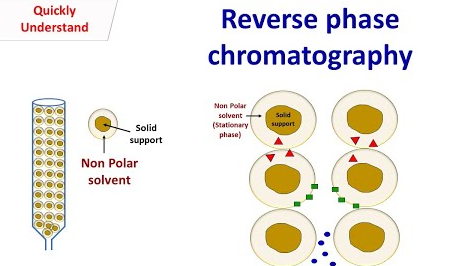
- Normal-Phase HPLC : Used for polar compounds.

- Size-Exclusion HPLC : Separates based on size.

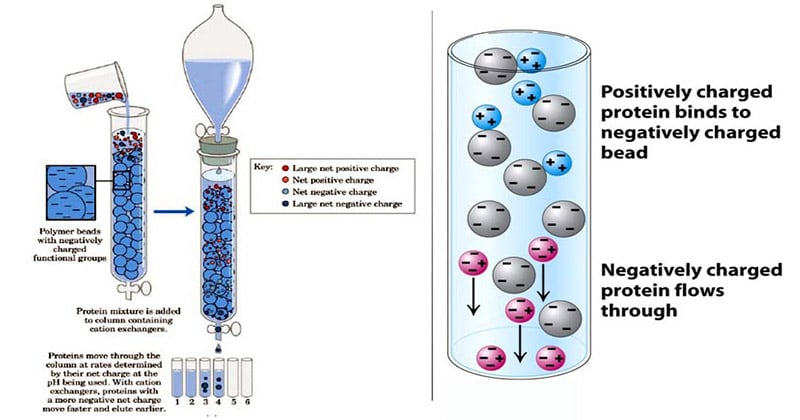
- Ion-Exchange HPLC : Separates based on charge.
HPLC Chromatogram
An HPLC chromatogram is a graphical representation of the separation. The x-axis represents the time (or volume of mobile phase used), and the y-axis represents the detector response (usually intensity or absorbance).
An exemple : HPLC chromatogram of 1 mg/mL standards of chlorogenic acid (3.30 min), caffeic acid (4.45 min) and rutin (7.55 min).
HPLC Instrumentation
Understanding HPLC instrumentation is crucial to mastering the technique. The primary components are the pump, column, and detector.
The HPLC machine can vary in complexity, with modern systems offering enhanced features such as multi-detector systems for simultaneous detection of different analytes.
HPLC in Chemistry
In chemistry, HPLC chromatography is widely used for analyzing chemical substances, performing quality control, and even developing new pharmaceutical products. It is especially valuable for pharmaceutical analysis where purity and active ingredient concentrations must be monitored.
How to Perform HPLC?
To perform HPLC, follow these steps :
1- Prepare the sample and mobile phase.
2- Set up the HPLC machine with the correct column and solvent.
3- Inject the sample into the system.
4- Monitor the separation through the detector and analyze the resulting chromatogram.
What Does HPLC Do?
HPLC serves multiple purposes :
- Separation : Different compounds in a mixture are separated based on their interaction with the stationary phase.
- Identification : The chromatogram produced helps identify the compounds based on their retention time.
- Quantification : The area under the peaks in the chromatogram is used to quantify the amount of each compound.
Applications of HPLC
HPLC is used in a wide variety of fields, including :
- Pharmaceuticals : Analyzing drug purity and formulation.
- Environmental Chemistry : Detecting pollutants and toxins.
- Food and Beverages : Monitoring ingredients and contaminants.
- Clinical Research : Analyzing biological samples such as blood or urine.
Key Benefits of HPLC
1- High Precision : HPLC offers high separation efficiency and accuracy.
2- Versatility : Suitable for a wide range of compounds, including small molecules, peptides, and proteins.
3- Quantitative and Qualitative Analysis : Both qualitative identification and quantitative analysis can be achieved.
HPLC vs Other Chromatography Techniques
Compared to other chromatography methods, HPLC is often preferred for its speed, sensitivity, and ability to analyze complex mixtures. Other techniques like gas chromatography (GC) are more suitable for volatile compounds, while thin-layer chromatography (TLC) is less sensitive.
To summarize:
- HPLC is a powerful analytical tool used to separate and analyze components in mixtures.
- It works by applying high pressure to move the mobile phase through the column, separating components based on their interaction with the stationary phase.
- HPLC is used in various fields, including pharmaceuticals, environmental science, and food analysis.
hplc chromatography
hplc
high performance liquid chromatography
how does hplc work
what is hplc
Published by Gentaur
01 Apr 2026
Recent Posts
14 Oct 2026Gentaur
cfDNA Extraction: Methods, Protocol, Sample Preparation, and Quality ControlIntroduction to cfDNA Extraction cfDNA extraction is the laboratory process used to isolate cell-free DNA (cfDNA) from biological samples, particularly blood plasma. This DNA consists of extracellular DNA fragments released into body fluids through c
08 Oct 2026Gentaur
Human Interleukin 6 ELISA Kit : Complete Guide to il 6 ELISA TestingInterleukin-6 (IL-6) is an important cytokine involved in immune regulation, inflammation, and cellular communication. Il 6 ELISA testing provides researchers with a practical method for detecting and quantifying human IL-6 in biological samples. A H
06 Oct 2026Gentaur
Automated Plasmid PurificationAutomated plasmid purification is becoming increasingly important in molecular biology laboratories that need to process larger numbers of samples while maintaining consistent DNA quality. Instead of relying entirely on manual centrifugation, pipetti
28 Sep 2026Gentaur
How to Interpret ELISA Results : A Practical Guide to OD Values, Standard Curves, Cutoffs and ControlsEnzyme-linked immunosorbent assay (ELISA) Enzyme-linked immunosorbent assay ( ELISA ) is widely used to detect and quantify proteins, antigens, antibodies, hormones, and other biological molecules. After completing an ELISA, the laboratory instrument