Optimizing Organoid and 3D Cell Culture Workflows with Defined Matrices

Gentaur
25 Mar 2026
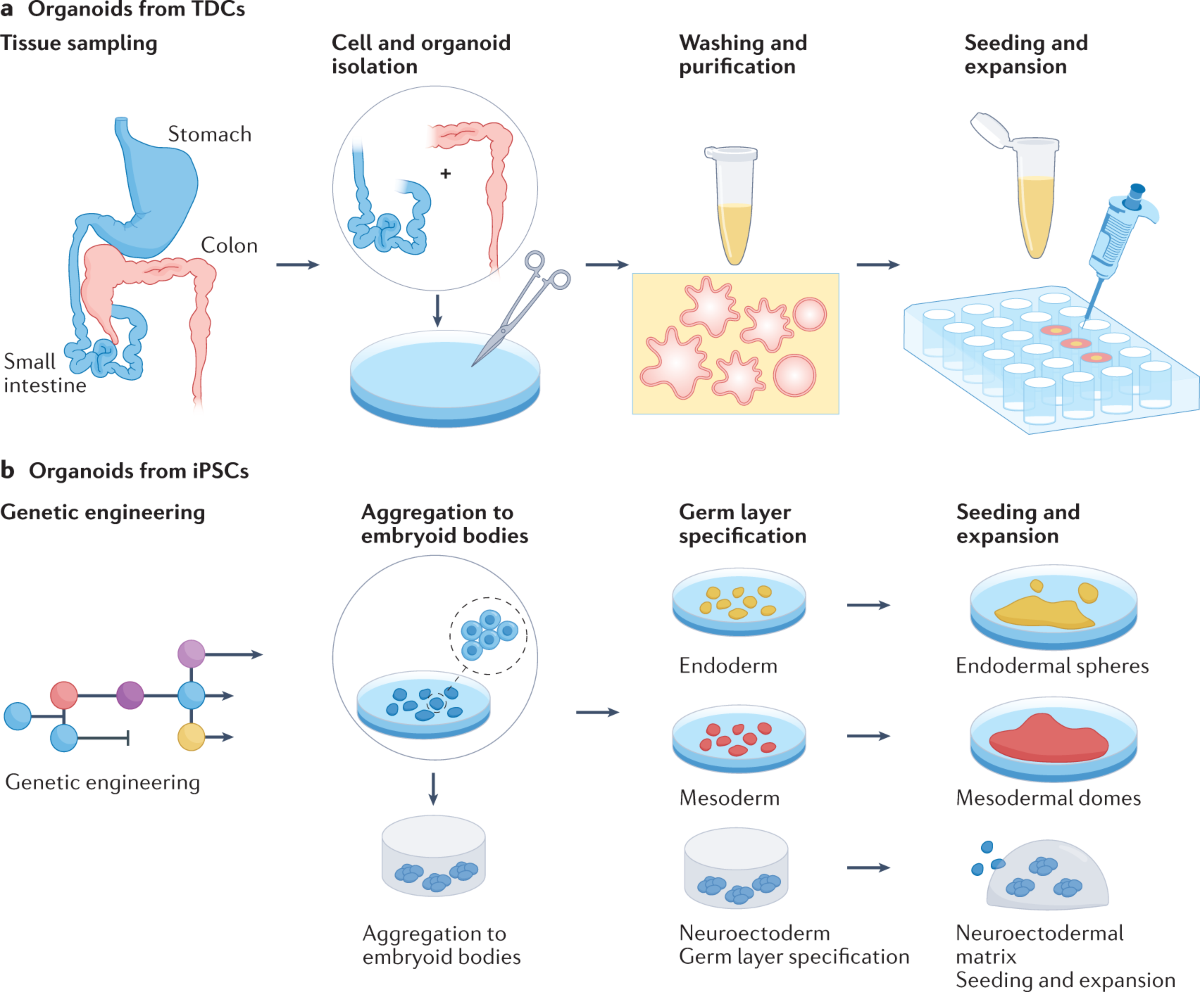
In biomedical research, organoid and 3D cell culture systems provide physiologically relevant models for studying tissue development, cellular behaviors, and functional responses. A critical factor in these cultures is the extracellular matrix (ECM), which provides the structural and biochemical environment necessary for cells to grow, differentiate, and organize into complex three-dimensional structures
The Role of Matrices in Organoid Culture
Organoids are self-organizing, stem cell-derived tissues. Their growth and functionality depend on several matrix properties:
- Mechanical properties: Stiffness and elasticity guide cell differentiation and tissue organization.
- Biochemical composition: Collagens, laminins, and other ECM components influence cell signaling.
- Consistency: Well-defined matrices reduce variability, improving reproducibility across experiments.
For example, researchers often use matrices optimized for organoid culture, including growth factor reduced or phenol red-free formulations, to support stem cell-derived organoids while maintaining consistent structure and function.
Related products
Mogengel Matrix Organoid Culture
Catalog number: GTR15938849Mogengel Matrix GFR HC
Catalog number: GTR15938868Stem Cell Culture Ready-To-Use Mogengel Matrix
Catalog number: GTR15938867Specialized Matrices for Sensitive Experiments
Certain experimental setups require additional matrix features:
- Phenol red-free formulations minimize interference in imaging and fluorescence assays.
- Antibiotic-free matrices maintain sterility without affecting delicate cellular behaviors.
- Growth factor-reduced matrices allow precise control over the biochemical environment.
These specialized matrices help ensure reproducible and reliable results in sensitive experiments, from stem cell differentiation to organoid and 3D culture studies.
Related products
Mogengel Matrix GFR Phenol Red Free
Catalog number: GTR15938854Mogengel Matrix GFR Phenol Red Free Antibiotic Free
Catalog number: GTR15938855Supporting Advanced 3D Assays
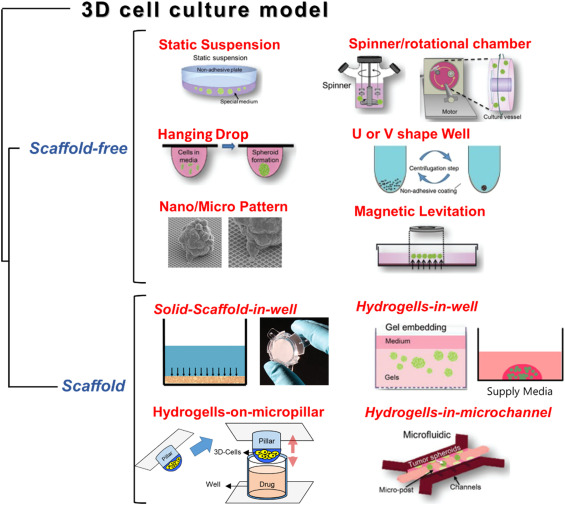
Defined matrices also play a key role in functional 3D assays, including:
- Tube formation assays to study angiogenesis.
- Cell invasion assays to model migration and metastasis.
- Stem cell culture for expansion and differentiation studies.
By providing predictable gelation, mechanical properties, and biochemical cues, these matrices allow researchers to focus on biology rather than matrix variability.
Related products
Mogengel Matrix GFR Phenol Red Free
Catalog number: GTR15938854Mogengel Matrix GFR
Catalog number: GTR15938853Mogengel Matrix HC Phenol Red Free
Catalog number: GTR15938871Mogengel Matrix Phenol Red Free
Catalog number: GTR15938842Selecting the Right Matrix for Your Research
When choosing a matrix, consider:
- Application type – Organoid cultures, stem cell expansion, or functional assays may require different formulations.
- Assay sensitivity – Phenol red-free matrices are preferred for fluorescence-based experiments.
- Sterility requirements – Antibiotic-free matrices are ideal for detecting subtle microbial contamination.
- Reproducibility – Defined matrices reduce variability and support consistent experimental outcomes.
Related products
Stem Cell Culture Ready-To-Use Mogengel Matrix
Catalog number: GTR15938867Mogengel Matrix GFR Phenol Red Free Antibiotic Free
Catalog number: GTR15938847Mogengel Matrix HC Phenol Red Free
Catalog number: GTR15938846Mogengel Matrix Organoid Culture
Catalog number: GTR15938849Conclusion
A carefully chosen matrix is essential for the success of organoid, stem cell, and advanced 3D culture experiments. Using defined and application-specific matrices helps researchers achieve reproducible growth, reliable differentiation, and tissue-like functionality, enabling high-quality studies in tissue biology, cellular behavior, and functional modeling.
By considering matrix properties and experimental requirements, scientists can focus on meaningful biological insights rather than variability in their culture systems.
HumanBiology
MedicalBiology
CellBiology
Research
BiologyEducation
Published by Gentaur
25 Mar 2026
Recent Posts
14 Oct 2026Gentaur
cfDNA Extraction: Methods, Protocol, Sample Preparation, and Quality ControlIntroduction to cfDNA Extraction cfDNA extraction is the laboratory process used to isolate cell-free DNA (cfDNA) from biological samples, particularly blood plasma. This DNA consists of extracellular DNA fragments released into body fluids through c
08 Oct 2026Gentaur
Human Interleukin 6 ELISA Kit : Complete Guide to il 6 ELISA TestingInterleukin-6 (IL-6) is an important cytokine involved in immune regulation, inflammation, and cellular communication. Il 6 ELISA testing provides researchers with a practical method for detecting and quantifying human IL-6 in biological samples. A H
06 Oct 2026Gentaur
Automated Plasmid PurificationAutomated plasmid purification is becoming increasingly important in molecular biology laboratories that need to process larger numbers of samples while maintaining consistent DNA quality. Instead of relying entirely on manual centrifugation, pipetti
28 Sep 2026Gentaur
How to Interpret ELISA Results : A Practical Guide to OD Values, Standard Curves, Cutoffs and ControlsEnzyme-linked immunosorbent assay (ELISA) Enzyme-linked immunosorbent assay ( ELISA ) is widely used to detect and quantify proteins, antigens, antibodies, hormones, and other biological molecules. After completing an ELISA, the laboratory instrument