What Is NGS? A Beginner’s Guide to Next-Generation Sequencing

Gentaur
23 Jul 2025
Curious about DNA sequencing? Discover how Next-Generation Sequencing (NGS) works, why it's revolutionizing science, and where it’s used from biology labs to environmental research.
What Exactly Is NGS?
Next-generation sequencing (NGS), also known as high-throughput sequencing, is a technology that allows for the rapid sequencing of millions or billions of DNA or RNA fragments simultaneously.
This method has revolutionized genomics research by enabling large-scale analysis of genetic material, providing detailed information about genomes, genetic variations, and gene expression.
Related products
NGS Multiplex PCR Master Mix, 2X
Catalog number: GTR17122236NGS CF Control Panel G211 v1.1
Catalog number: GTR08294047Human Mullerian Inhibiting Substance, MIS ELISA Kit
Catalog number: GTR07857396NGS CF Control Panel G211plus
Catalog number: GTR15053098NGS fragments selection reagents
Catalog number: GTR13388800NGS Cleanup Reagent
Catalog number: GTR06970114What is DNA sequencing?
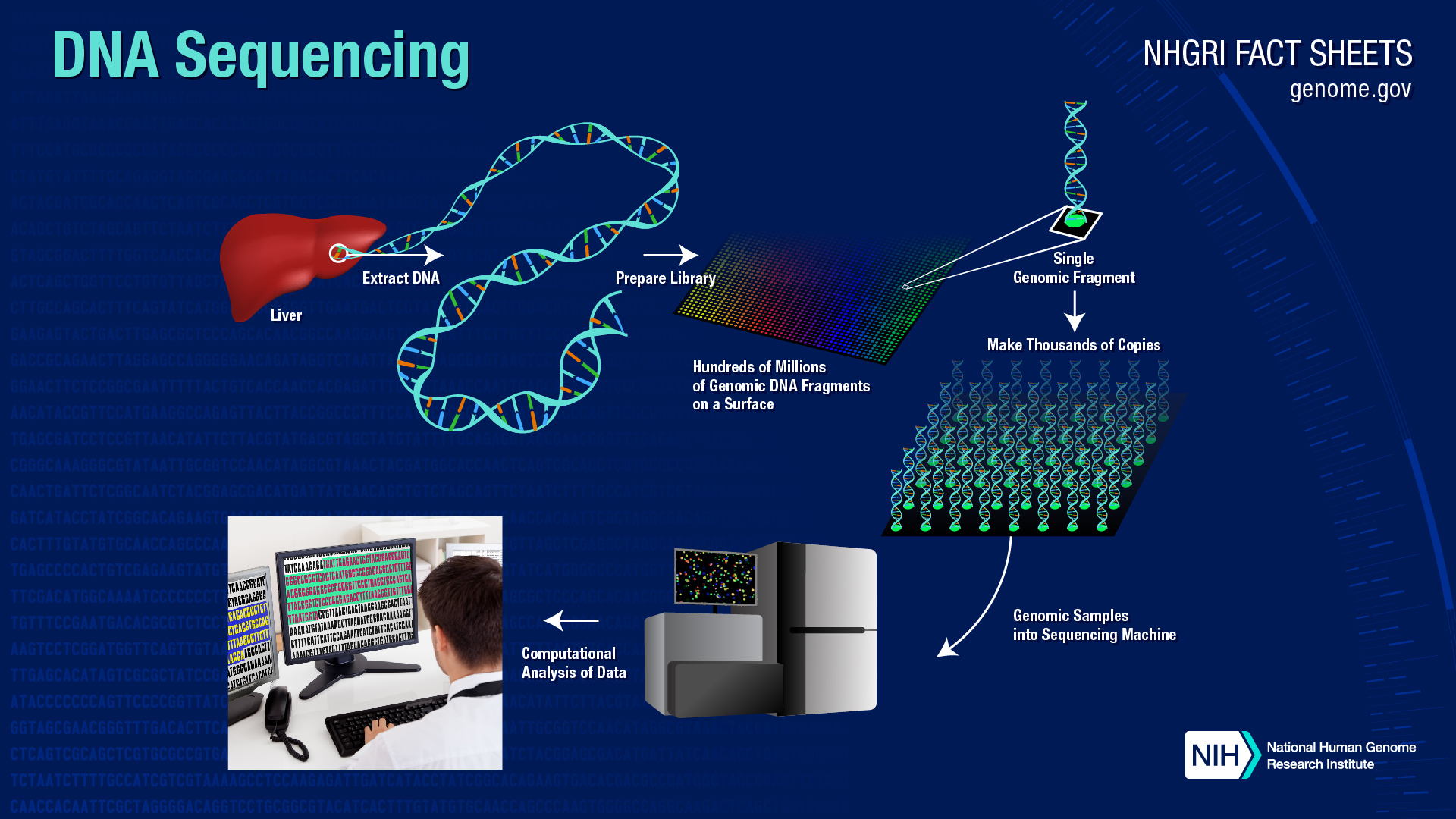
Sequencing DNA means determining the order of the four chemical building blocks - called "bases" - that make up the DNA molecule. The sequence tells scientists the kind of genetic information that is carried in a particular DNA segment. For example, scientists can use sequence information to determine which stretches of DNA contain genes and which stretches carry regulatory instructions, turning genes on or off. In addition, and importantly, sequence data can highlight changes in a gene that may cause disease.
In the DNA double helix, the four chemical bases always bond with the same partner to form "base pairs." Adenine (A) always pairs with thymine (T); cytosine (C) always pairs with guanine (G). This pairing is the basis for the mechanism by which DNA molecules are copied when cells divide, and the pairing also underlies the methods by which most DNA sequencing experiments are done. The human genome contains about 3 billion base pairs that spell out the instructions for making and maintaining a human being.
Related products
Custom DNA sequencing
Catalog number: GTR04580430SpeedySeq DNA Sequencing
Catalog number: GTR0230846710 X TTE DNA Sequencing Grade
Catalog number: GTR03686345TBE-Buffer 5X for DNA Sequencing
Catalog number: GTR05196990DNA Sequencing Clean-Up Kit (200prep)
Catalog number: GTR13689673DNA Sequencing unit, 33cm wide, standard glass plates
Catalog number: GTR15074714DNA Sequencing unit, 20cm wide, standard glass plates
Catalog number: GTR10223740How Does NGS Work?
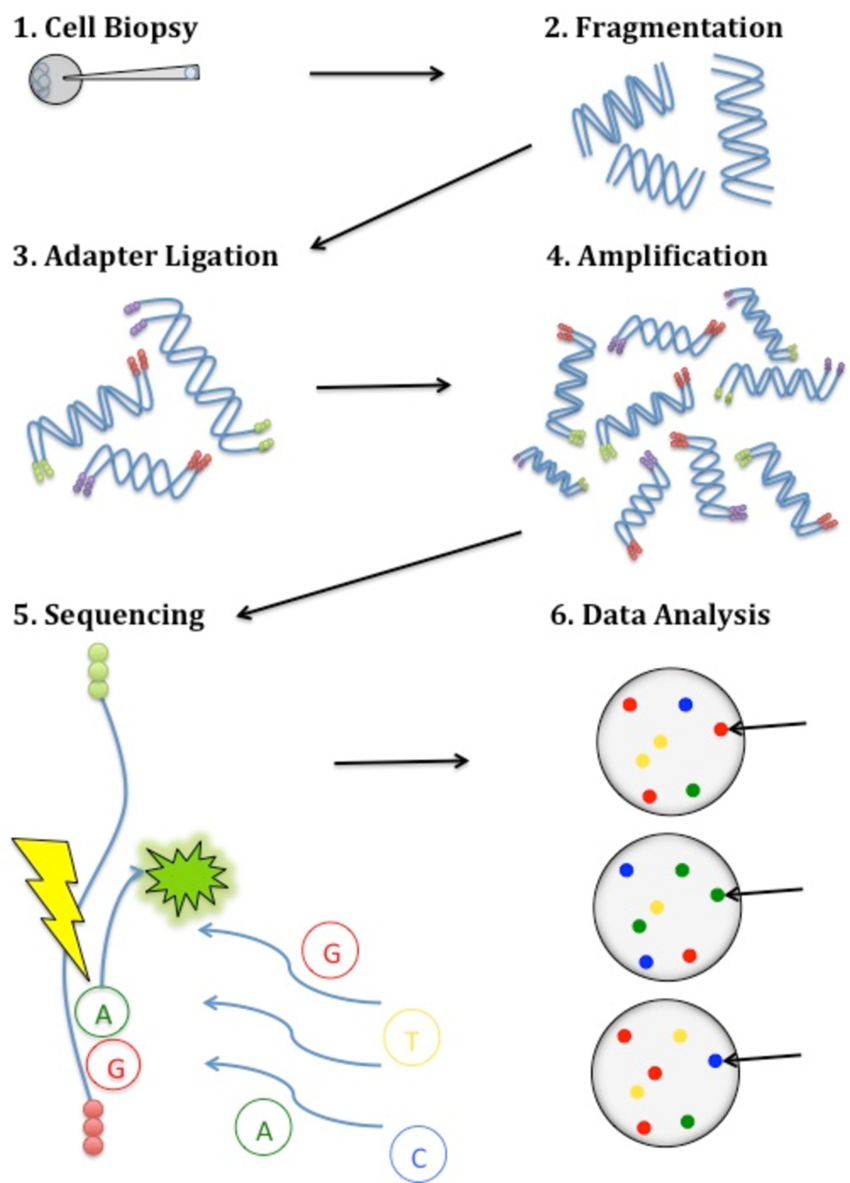
Next-Generation Sequencing (NGS) works by breaking DNA into small pieces, reading those pieces in parallel, and using software to reconstruct the full sequence. It’s like shredding a book into tiny slips of paper, scanning them all at once, and using a computer to put the story back together.
1. Sample Collection and DNA Extraction
Scientists start by collecting cells from bacteria, plants, or human samples and extract the DNA. This is the raw material to be sequenced.
Think of DNA as a long string of genetic instructions written in A, T, C, and G.
2. Fragmentation
The long strands of DNA are cut into smaller pieces. This is done using enzymes or sonication (sound waves) so they can fit into the sequencing machine.
Typical fragment sizes range from 150 to 600 base pairs.
3. Library Preparation
Each DNA fragment is given special adapters on both ends. These are short, known DNA sequences that:
- Allow the DNA to stick to the flow cell (inside the sequencer)
- Act as starting points for copying
- Identify which sample the DNA came from (barcoding)
4. Amplification
The prepared fragments are copied many times using PCR (polymerase chain reaction). This ensures there’s enough DNA for the sequencer to detect.
This step boosts the signal, like turning up the brightness on a screen.
5. Sequencing
Here’s the magic:
- DNA fragments are placed on a flow cell (a tiny glass slide).
- A sequencing machine adds one fluorescently labeled base (A, T, C, or G) at a time.
- A camera takes a picture after each base is added.
- The color of the light tells the machine which base was added.
- This repeats millions of times in parallel, reading all fragments.
This process is called sequencing by synthesis in most platforms like Illumina.
6. Data Analysis
- Once all fragments are read, bioinformatics software assembles the sequences like a jigsaw puzzle:
- It matches overlapping parts
- Reconstructs the original DNA sequence
- Identifies mutations, insertions, deletions, and gene expressions
This step uses algorithms to sort and align millions of reads accurately.
Related products
NGS Normalization 96-Well Kit
Catalog number: GTR09976861NGS Library Quantification Lo-ROX Kit
Catalog number: GTR06681403T-Pro Genomic DNA Mini Kit (100)
Catalog number: GTR05664852NGS Multiplex PCR Master Mix II, 2X
Catalog number: GTR17122238What Makes NGS So Powerful?
Clinical Genetics:
- NGS detects more mutations than older methods like Sanger sequencing. It identifies small changes, deletions, and complex DNA rearrangements all in one test no need for separate assays like FISH or CGH arrays.
- No prior knowledge needed: Unlike traditional methods that target known genes, NGS can scan the whole genome or exome to find completely new disease causing mutations. This helps diagnose unexplained genetic conditions, especially in children.
- Higher sensitivity: NGS can detect rare or mosaic mutations that may be missed by older methods. This is useful for analyzing fetal DNA in maternal blood or tracking cancer cells in the bloodstream.
Microbiology:
- NGS can identify pathogens by reading their entire genome, replacing older methods like staining or culturing. It helps trace infection sources and drug resistance.
- Example: NGS uncovered an undetected MRSA outbreak in a UK hospital and traced it to one staff member.
Oncology:
- Cancer is caused by genetic mutations. NGS allows full sequencing of tumors to find those mutations.
- Benefits for patients include better diagnosis, prognosis, and the potential to match specific mutations with targeted treatments.
- Pilot programs are already testing NGS in clinics for personalized cancer care.
Limitations of NGS in Clinical Practice
- High setup requirements: NGS needs powerful computers, large data storage, and skilled experts to interpret complex results.
- Data management is challenging: The large volume of sequencing data must be carefully filtered to find clinically relevant information.
- Cost efficiency depends on scale: While sequencing itself is cheap (millions of reads for ~£1000), it’s only cost-effective when run in large batches, often requiring centralized, regional labs.
- Upfront investment: Setting up an NGS facility is expensive at first, but once established, it can serve nationwide needs and improve both efficiency and patient care.
Biology
gentaur
LifeSciences
Genetics
Published by Gentaur
23 Jul 2025
Recent Posts
14 Oct 2026Gentaur
cfDNA Extraction: Methods, Protocol, Sample Preparation, and Quality ControlIntroduction to cfDNA Extraction cfDNA extraction is the laboratory process used to isolate cell-free DNA (cfDNA) from biological samples, particularly blood plasma. This DNA consists of extracellular DNA fragments released into body fluids through c
08 Oct 2026Gentaur
Human Interleukin 6 ELISA Kit : Complete Guide to il 6 ELISA TestingInterleukin-6 (IL-6) is an important cytokine involved in immune regulation, inflammation, and cellular communication. Il 6 ELISA testing provides researchers with a practical method for detecting and quantifying human IL-6 in biological samples. A H
06 Oct 2026Gentaur
Automated Plasmid PurificationAutomated plasmid purification is becoming increasingly important in molecular biology laboratories that need to process larger numbers of samples while maintaining consistent DNA quality. Instead of relying entirely on manual centrifugation, pipetti
28 Sep 2026Gentaur
How to Interpret ELISA Results : A Practical Guide to OD Values, Standard Curves, Cutoffs and ControlsEnzyme-linked immunosorbent assay (ELISA) Enzyme-linked immunosorbent assay ( ELISA ) is widely used to detect and quantify proteins, antigens, antibodies, hormones, and other biological molecules. After completing an ELISA, the laboratory instrument